2009年10月1日星期四

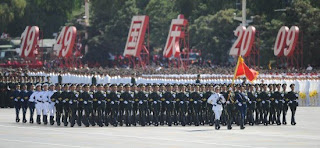
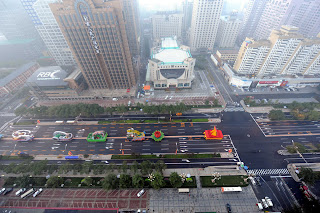
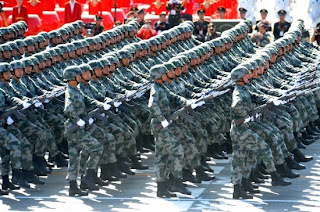
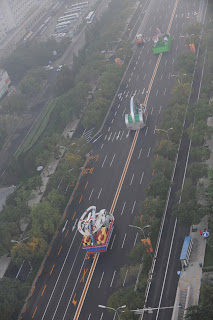
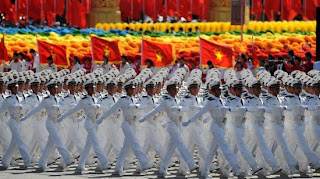
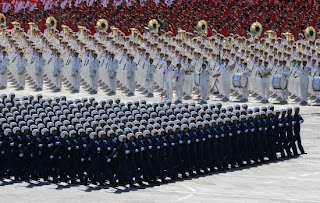
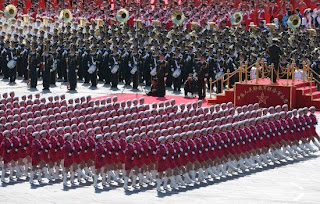
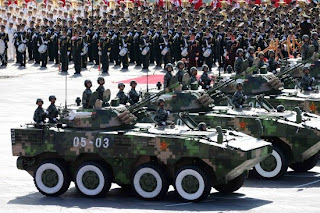
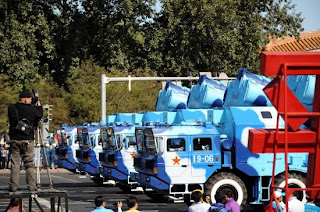
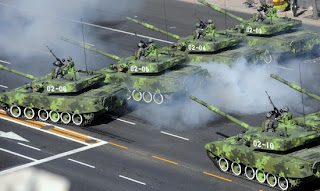
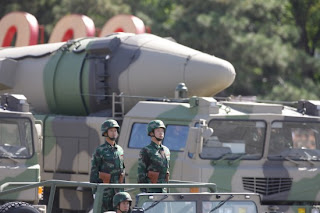
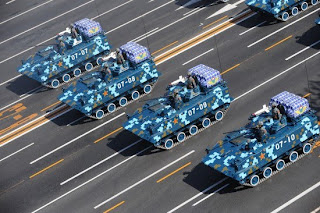
2009 Chinese National Day(Parade)

The People's Republic of China Chronology

September 27, 1949, the first plenary session of the CPPCC National Committee unanimously adopted by The People's Republic of China using AD Annals.

The People's Republic of China National Day

December 3, 1949, the Central People's Government, the fourth meeting of the Committee to accept the recommendations of the CPPCC National Committee adopted the "Resolution on the National Day of The People's Republic of China" and decided to October 1 every year for The People's Republic of China was proclaimed a great day, To The People's Republic of China National Day.

National Day is a feature of modern nation-state is accompanied by the emergence of modern nation-states emerged, and it becomes particularly important. It became an independent state symbol, reflecting the country's state and political systems.

National Day to commemorate this special way, by becoming a new, universal form of the festival, it reflected the country that hosts the nation's cohesion function. At the same time scale on the National Day celebrations, but also for mobilization and a concrete manifestation of appeal. Show of force, enhance national confidence reflects the cohesion and play appeal, namely, the National Day celebrations of the three basic features.
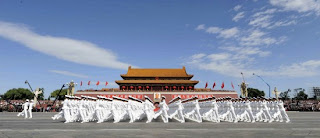
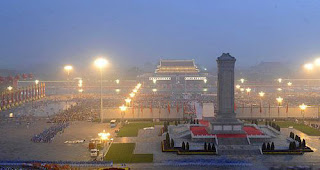
October 1, 1949 The People's Republic of China after the establishment of the National Day celebration forms have been changed several times. Placed in the lower right photo shows flowers to celebrate National Day in Tiananmen Square.

gq the early days of New China (1950-1959), the annual National Day celebrations were held in large-scale events held simultaneously parade. In September 1960, the CPC Central Committee and the State Council in line with the principle of diligence and thrift, decided to reform the National system. Thereafter, from 1960 to 1970, the annual National Day in Tiananmen Square were held before the grand rallies and mass demonstrations, but no parade was held.

From 1971 to 1983, the annual October 1, Beijing is to a large gathering of the Garden, and other forms of celebrating the National Day, not to conduct mass demonstrations. In 1984, the National Day 35th anniversary, held a grand celebration of National Day military parade and mass demonstrations. Over the next 10 years, other forms are used to celebrate the National Day, no longer held to celebrate the National Day military parade and mass demonstrations. October 1, 1999, the 50th anniversary, held a grand celebration of National Day military parade and mass demonstrations. This is The People's Republic of China was held in the 20th century, the last grand National Day celebration.

Since the founding of New China in National Day celebrations conducted on a total of 13 military parade. Respectively, from 1949 to 1959 between 11 and the 1984 National Day 35th anniversary of the 1999 50th anniversary of the two.

National Day is a feature of modern nation-state is accompanied by the emergence of modern nation-states emerged, and it becomes particularly important. It became an independent state symbol, reflecting the country's state and political systems.

National Day to commemorate this special way, by becoming a new, universal form of the festival, it reflected the country that hosts the nation's cohesion function. At the same time scale on the National Day celebrations, but also for mobilization and a concrete manifestation of appeal.

Close of the demonstration, people tend to gather in parks or public places, in celebration of festivals, enjoy song and drink. If you just run into the presidential election or parliamentary elections, politicians are often at this time we have stepped up a campaign speech. Show of force, enhance national confidence reflects the cohesion and play appeal, namely, the National Day celebrations of the three basic features.





2009年9月30日星期三

Charming Qingdao

Qingdao Overview


 Shandong Peninsula, red tile green trees, blue sea and sky in the inlaid with a beautiful city - Qingdao. Qingdao, east, south verge of the Yellow Sea, Yantai City, adjacent to the northeast and the west and the Weifang City, connected to the southwest border with Rizhao City is China's famous seaside resort.


Qingdao's geographic information

Qingdao City high altitude terrain in the north, from north to central and western gradually reduced, the southeast coastal areas and low-lying coastal areas of Jiaozhou Bay, Qingdao in the north and south is mainly mountainous and hilly, Laoshan Mountain in this, the mountains more stretch Jiaozhou Bay Jiaozhou, Jiaonan territory, Laoshan mountain of Taoism, Lao Mountain top for the whole mountain the highest point, elevation 1133 meters, but also the highest mountain in Qingdao, the province ranks second in height only to Mount Taishan summit (1524 meters ) is the highest among China's coastal Moroyama mountain.


Total length of 730.6 kilometers coastline of Qingdao, Jimo City, Jinkou north by Laoshan District, Shinan District, the Urban North, Sifang, Licang District, Chengyang District, Jiaozhou City, Huangdao District, south Jiaonan Song Ling . Mostly tortuous coastal beaches, headlands alternating with the Gulf, a total of 49 Gulf. Jiaozhou Bay, Qingdao City, Shandong Peninsula, the largest but also the largest of the Gulf, north to south and 32.5 kilometers from east to west width of 28 kilometers, an area of 436 square kilometers, Jiaozhou Bay, there are good conditions for ships Zhu Bo. Qingdao coast has many sandy beaches, many of them have been opened as a swimming beach, the sea there are many shoals, and some have been developed for the salt or seafood farms. Qingdao, the coastal islands have 52, with an area is not large, from the land close. Most of these islands were the development and utilization of marine tourism is a party to Xintiandi.

Qingdao tourist attractions

Qingdao mountain beside the sea, beautiful scenery and pleasant weather, is a unique waterfront city. Dotted hills hilly area spread in Qingdao city, buildings built according to terrain, red tile roof patchwork, together with the winding streets and lush rolling trees, constitute a unique geographical landscape Qingdao city.


Qingdao experienced vicissitudes of life in modern times, has a rich culture and scenic spots, according to the distribution of attractions and cultural connotation, with different features can be divided into four regions, namely: the West Old Town (Western style modern city), Eastern District (a modern international city style ), the Urban Hinterland (Jiaodong style of folk culture), suburban (style of ancient monuments). To Qingdao to visit, enjoy the pleasant climate and beautiful scenery; can also watch a blend of Chinese and foreign culture, the crystallization of the collision produced in-depth reflection and inspiration, which has a high tourism value.
In sum: Cape Bay, Qingdao, white, soft sand beach flat, coastal setbacks, the city with marine, sea Zengcheng color. Laoshan, mountain Xianfeng show, open You Yuan, uncanny workmanship. Badachu European-style architecture, modeling unique, red roof stone walls, exquisite exquisite, each with charm; religious buildings unique charm, urban Catholic church, Laoshan Taoist temple homes, Zhu Shan Buddhist Buddhist nunnery, its architectural style quite different, and the atmosphere solemn, ethereal holiness; celebrity house and intensive multi-national rare. Folk attractions widely distributed, the traditional long, wide variety of culture, heritage deep. Historical relics and cities all over the area, district, so that even more ancient, Qingdao, dignified, quiet and elegant. In this blend of Eastern and Western cultures, complement each other


Qingdao climate have distinctive features, that is: four seasons, summer and short winter long; summer without heat and winter less cold; precipitation is moderate, heat sufficient; the spring and summer and foggy in winter and spring large. Qingdao summer, shorter than the Mainland, an average of only 80 days a year, with average summer temperatures of 23 degrees Celsius, the hottest in August the average temperature was 25.1 degrees Celsius, due to ocean relatively cool, is that people summer, infirmary and the best season of swimming

Qingdao History

Qingdao, formerly known as glue Australia. In 1891 (the Qing dynasty, seventeen years) the Qing government decided at a rubber O fortification, Qingdao this build. The following year, transferred dengzhou Zhang Gao Yuan led his troops in the town of taking part glue moved to Australia. In November 1897, Germany, the "Juye lesson plans" as an excuse occupation rubber O, and forced the Qing government on March 6, 1898 signed a "rubber O Settlement Treaty." Since then, the rubber O reduced colony, Shandong has also been incorporated into the German sphere of influence. After the outbreak of World War I, in November 1914, Japan invaded and occupied Germany to replace the rubber O, military colonial rule


After World War I, the Chinese people waged a heroic struggle to recover Qingdao. In 1919, the issue of sovereignty as Qingdao, triggering the famous "54" campaign, forcing Japan February 4, 1922 with the Chinese government signed the "Treaty to resolve pending issues of Shandong." December 10 the same year, China's resumption of rubber O, opened as a commercial port, the establishment of rubber O commercial port supervision Corruption, directly under the Northern Government. Its administrative area with the German concessions in the same rubber Australia. In April 1929, the Nanjing Nationalist Government took over the rubber O commercial port, in July the same year set up special city, Qingdao. Qingdao City, was renamed in 1930.


In January 1938, Japan once again invaded and occupied Qingdao. In September 1945, the KMT government in the United States to receive the support of Qingdao, is still special city. June 2, 1949, Qingdao liberated. After the liberation, Qingdao, Shandong Province, provincial cities instead. 1981, was listed as the country's 15 cities in the world economic centers; in April 1984, was listed as the further opening up the country's 14 coastal port cities in the world; October 15, 1986, was the State Council officially approved the National Plan in the implementation of separate, giving the provincial level economic management authority; in February 1994, was listed as the country's 15 sub-provincial cities.

Taishan scenery

Ancient times known as Dai Zong, an area of 426 square kilometers, 1545 meters above sea level. Taishan magnificent long history and artifacts in order to "five mountains overwhelming" reputation of the famous ancient and modern. Taishan is like a towering monument to the nation stands on the vast land of China has attracted worldwide attention.


In 1982, Taishan was listed as the first batch of the State Council, National Key Scenic Area in 1987 by UNESCO as a World Natural and Cultural dual heritage tourist attraction in 1992, topped the national good bang 40. Mount Tai has a better protection of ancient buildings there are 22, with a total construction area of 14 thousand square meters. Between the ancient buildings, there are 12 Shihfang, six bridges, seven shiting, a bronze pavilions and a tower. Taishan Stele 2200 multiple, known as "China's Cliff Stele Museum", where the earliest system of Chinese Stele monument - Tai Qin Stele; a valuable Han Zhang Qian monument, monuments, and Jin-Heng Fang Madame Sun Monument ; are known as the "originator of Chinese characters", "List of cases in the book," Valley of the Northern Qi Dynasty Stele by stone; a world to the imposing Xuanzong "Tai Chi-ming," and the Tang Dynasty, such as dual-beam Monument.


Taishan many old and valuable trees, known as "the living world natural heritage." Taishan more than a hundred years old trees three thousand lines, of which 2,100 years ago, Han Bo 6, 1300 pre-existence of the Tang Huai, 500-year pre-existence of the look of people loose, five Gustafsson, as well as a acclaim pre-existence as a national treasure of the bonsai pine trees 600 years, "Small Six Dynasties Song." Taishan known reputation for sublime, showing a male, strange, dangerous, show, secluded, Austria, Kuang and many other America's image, Taishan scenic area there are the famous Black Dragon Pool, fan Cliff, Tin candle-feng, taohuayu other 10 natural landscape; there is the rising sun, sunset glow, the Yellow River gold belt, jade plate of 10 natural wonders of the sea of clouds.
As the world's natural heritage, Taishan, in terms of scientific research, protection of view or from the aesthetic value, have outstanding features, so it is not only a high degree of attention by many scientists, but also received numerous tour's favorite. Taishan scenery magnificent, the main peak proudly roots around the main peak there are 112 well-known peaks, cliffs Ridge 98, Valley 102, constitute the peaks arch-dai, the magnificent Taishan Mountains. Overlooking the Taishan, south of the mountain from east to west there are Dongxi, China Creek, Xixi, three Otani, from east to west, the northern foot of Tianjin River, Tin candle-feng, taohuayu Otani 3, 6 Otani River respectively to the direction of radiation 6 , the Taishan Mountains of naturally divided into six irregular regions, six regions, different landscapes, forming the famous Mount Tai of the six tourist area. Dengfeng the emperors of old Tarzan, multi-stone steps from the edge of the Road, so the Road called "beyond the bounds scenic spots", but also because of this way Shen You, therefore also known as "A Quiet Zone."


Taishan Daiding 1,500 meters above sea level, a Japanese concept of peak view month peak, Taketo peak, peak trunk surrounded, there Bixia Temple, Yuhuangmiao, Zhan Lu units, set off a celestial bridge, to stand here and look at its sights, mountains, rivers, wilderness, city spreads out below, and often can be seen "rising sun" "sunset afterglow," "The Yellow River Gold Belt" and the "sea of clouds jade plate" four wonders, is the Taishan "wonderful area", while the part of the foothills of Mount Tai-yang, due to the activities of many ancient, extremely rich cultural landscape is also a good place to visit, known as "Korea Zone." "A Quiet Place, Kuang, Austria, shows, Miao, Li" is the essence of Taishan Shenxiu, it is both the heavens, and there are countless thousands of workers to build. Tarzan the first of its magnificent majestic, dignified and solemn, simple and honest simplicity and Qing Xiu-juan Li's natural shape, become an aesthetic practice, an important source. Same time, people turn their own aesthetic ideal given Taishan, the aesthetic sense of its own reification in Taishan among the various natural and cultural landscape to make it into the aesthetic created by the crystallization of the Chinese nation.
Taishan has attracted a large number of cultural celebrities, poets scholars to pour in, they monastery Range Rover, and write poetry author, leaving behind a wealth of cultural works. Confucius, Guan Zhong, Sima Qian, Zhang Heng, Zhuge Liang, Cao Zhi, Li Bai, Du Fu, Liu Yuxi, but Su, Ouyang Xiu, Fan Chung-yen, Wang Shi-zhen, Yao Nai, Kuo Mo-jo and so the book Getting to Know illness, leaving behind a multitude of Chung Dai poetry to tourists lead the tour from the mountain god worship of view, seeking knowledge, the aesthetic of the new direction. From the foot up the stairs to the summit of Mount Tai, only there are more than a thousand LITHOGLYPHS Department, from the Qin to the Qing dynasties Jie You. The colorful body of the book, the book is intended in different generations, their scale, works as many times as well as the continuity of style, genre, art is superb and ingenious structure are world famous King's second to none. Stele contained in the affectionate and towering high-Yun Tai a magnificent blend fully reflects the noble spirit of self-improvement of the Chinese nation.


2009年9月28日星期一

Wudang Mountain

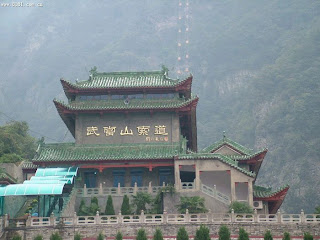
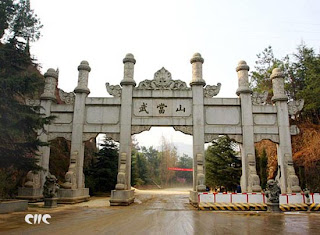
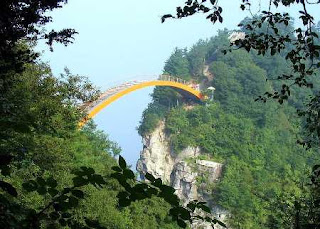
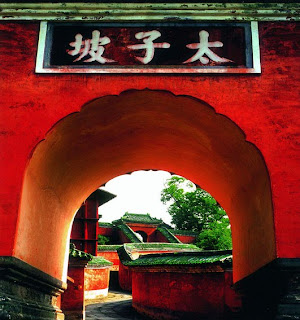
   Wudang Mountain, also known as Tai Shan, located in Shiyan City, Hubei Province South, Wudang Mountain is the earliest temple built in the Tang Dynasty, Ming Yongle, the Yongle Emperor Palace Museum in Beijing, built and, by the rate of the original class and Industry assistant minister GUO Jin Teng-Hao graciousness Dang Kai Jin Wudang Mountain, has built seven palaces, two concept, 36 Um, and 72 Cliff Temple complex.


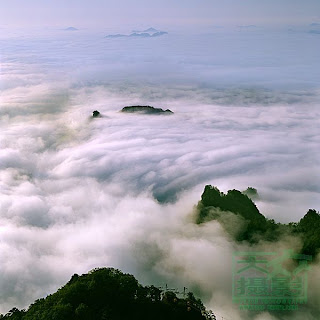
   Wudang Mountain, the world famous since ancient times. It is in Hubei province, north of Qinling north, south Bashan, rolling, vertical and horizontal more than 400 kilometers. The Song Dynasty calligrapher Mi Fu wrote a bold worked Wudang powerful "First Mountain" three characters. As a tourist destination, Wudang three main features.

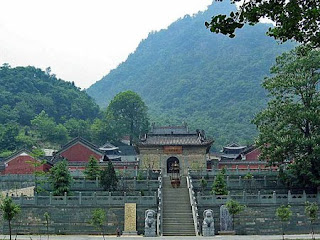
  There are grand Wudang Mountain ancient architecture. It is said that in the construction of the scale, over five mountains. As early as 1,300 years ago in the Tang dynasty Zhenguan years, namely the construction of Wulong Temple Wudang Mountain to promote Taoism. After a gradual increase of Taoism, Taoist Wudang Mountain has become famous. Mount Wudang Taoism, worship, "Xuan Wu naive God," is said, Wudang Mountain is from the "non-real-wu not enough when it" name. Yuan Dynasty, Wudang Mountain ancient architecture on the majority of destroyed Bingluan. At present the mountain temples, mostly built in the Ming Dynasty. Eleven years Ming Yongle (AD 1413), Zu Zhu Di sent assistant minister GUO Jin and so on, servitude craftsmen more than 30 million soldiers and civilians, in the Wudang Mountain Tai Hing disabilities wood, spent nearly a decade, and built a net Le Palace, Ying-Yan Gong , Pak Tai Temple, Zixiao Gong, Nanyan Palace, jade dragon palace, Yuzhen Palace, Taihe Palace, complex real concept of yuan and outlook on 33 large buildings. In addition, built 39 bridges dye, 12 units, paving stone Dengdao the whole mountain, the entire Wudang Mountain to become a "real martial arts." Is designed to take full advantage of the topographical features, layout, clever, Wing, Taoist temples were built at the peak, mountain ranges, slope, rock, stream between the beautiful buildings, each with characteristics linked with each other again, the entire building complex density affordable and embodies the China's ancient architectural tradition of excellence. The main building has an existing Mirage, Zixiao Gong, Yuzhen Palace, complex real Temple.


   Wudang Mountain is located in the main peak day, peak column of the Golden Temple, is China's largest copper gilt hall built in the Ming Yongle fourteen years (1416). Hall, 5.5 meters wide and 5.8 m, 4.2 m into the depth. Hall pillars and caisson are fine motifs. Moi hung a gilded pearl, known as "shelter from the wind cents beads." Legend Zheke Baozhu to quell the mountain tops, not flowing into the Dianmen to ensure the hall Magic Lamp Chang-ming immortal. In fact, mountain wind not enter the palace walls and Dianmen because of the various castings, very tight and precise. Kanatonouchi a "real force" bronze statue weighs 10 tons. Dianwai is white jade railing Taiwan, the audience was about 1,500 meters of the Forbidden City. Wall by a huge rectangle of stone mountain Leiqi made. This Mirage to build the most magnificent peaks in the Wudang Mountain Tianzhu Feng dangerous on the has a "sky Yaotai Jinque" effect. Zi Xiaogong built in the Ming Yongle eleven years (1413), is the main palace Wudang Mountain is also the best preserved architecture. A total of temples, pavilions, corridors veranda 860, the size of a grand, imposing extraordinary.